We are not preparing students for the future if we are still designing schools for predictability
A reflection after hearing Salim Ismail at the Ad Astra Technology Summit: exponential change is already here, and schools need a faster metabolism without losing their human center.
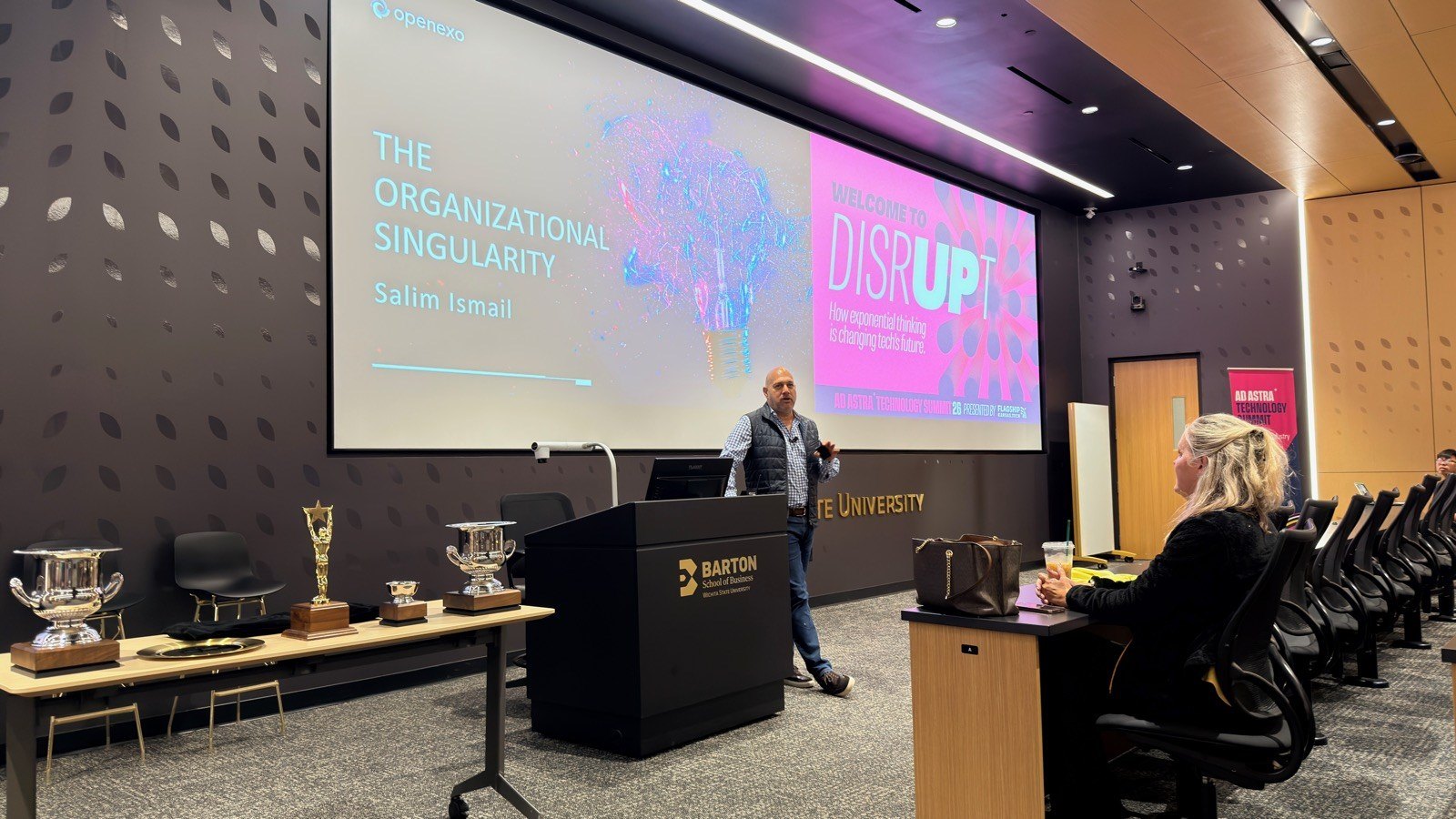
Last week at the Ad Astra Technology Summit at Wichita State University, I had the chance to listen to Salim Ismail talk about exponential technologies, AI, and what happens when our institutions start moving slower than the world around them.
That line has been sitting with me.
Most organizations were built for efficiency and predictability. Schools included. Especially schools.
We built systems around age groups, bell schedules, grade levels, course catalogs, credit hours, seat time, annual budgets, five-year plans, and committee cycles. Those structures made sense in a world where change moved slowly enough that predictability was a reasonable goal.
But that is not the world our students are walking into.
Salim's argument was direct: once a technology becomes information-based, it starts riding exponential curves. Costs fall. Capability rises. The time between "impossible" and "normal" collapses. AI is the obvious example right now, but it is not alone. Robotics, biotech, genomics, drones, energy, and other fields are all moving at once.
That is the part that matters. It is not one disruption. It is a stack of them.
And schools are still trying to decide whether phones belong in backpacks.
The metabolism problem
One idea from Salim's talk hit harder than the rest: when the metabolism of an organization becomes slower than the outside world, the organization is in trouble.
That is a brutal test for education.
Our students are already living inside systems that update constantly. Their information environment changes by the hour. The tools available to them change by the week. Entire job categories are being rewritten while they are still learning how to ask permission to use the restroom.
Meanwhile, education often responds to change by forming a committee, piloting a tool, writing a policy, waiting for the next budget cycle, and hoping the state assessment calendar does not notice.
That is not a criticism of educators. Teachers are doing heroic work inside systems that were not designed for this speed.
It is a criticism of the system design.
If the world outside school is accelerating, then our answer cannot be to make schools more rigid. We cannot compliance our way into relevance.
The shift from supply-side school to demand-side learning
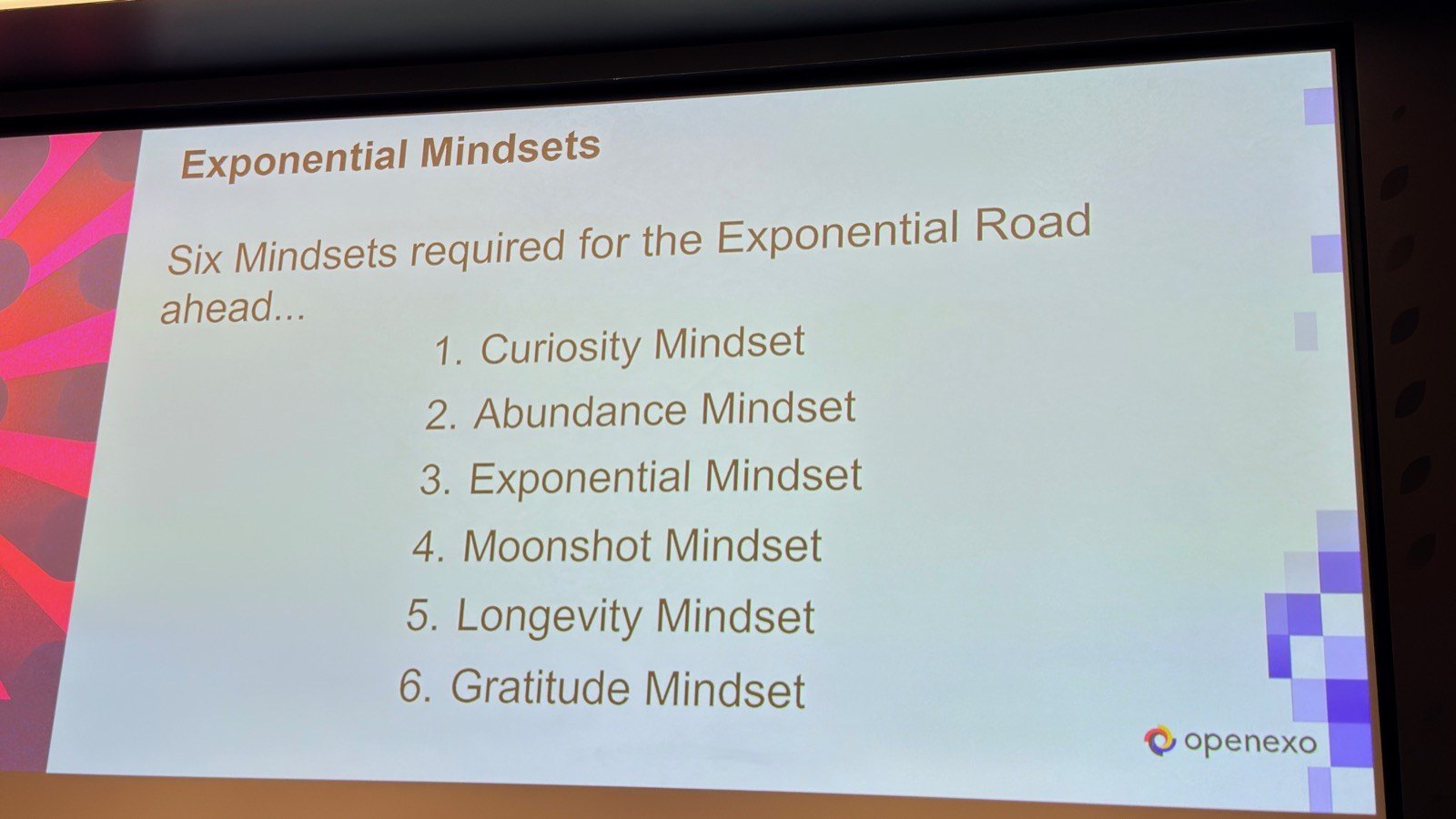
The most useful education idea from the day was the move from supply-side schooling to demand-side learning.
Supply-side schooling starts with the system.
Here are the courses. Here is the schedule. Here are the requirements. Here are the credits. Here is the pathway. Here is the credential. If you move through it correctly, we hope it connects to a meaningful life on the other side.
Demand-side learning starts with the learner and the problem.
What are you trying to solve? What are you curious about? What do you want to build, repair, improve, understand, or change? What skills do you need next? Who can help you? What tools can extend your reach? What evidence would show that you are getting better?
That does not mean abandoning structure. It means putting structure in service of purpose instead of making structure the purpose.
This is why I keep coming back to project based learning, microschools, career-connected learning, apprenticeships, and student agency. Not because they are trendy. Because they are closer to the way learning actually works when people are doing meaningful work.
At Creative Minds, we see this every day. Kids do not need school to become easier. They need it to become more real. They need productive struggle, feedback, relationships, and room to chase a question long enough for it to matter.
That is not soft. That is rigorous in a way worksheets can only cosplay.
AI changes the toolset, not the mission
There is a lazy version of the AI conversation in education that treats the whole thing like a procurement problem.
Which chatbot should we buy? Which detector should we trust? Which policy template keeps us out of trouble? Which tool gives teachers five minutes back?
Those are not bad questions. They are just not enough.
AI changes what students can do. It changes what teachers can design. It changes what counts as original work, useful feedback, meaningful assessment, and responsible support. It also changes what adults can automate, which means we need to be honest about judgment, privacy, equity, and trust.
Salim talked about AI agents and the need for governance loops, sensing layers, and oversight. That matters for schools too.
If we are going to give students access to powerful tools, we have to teach them how to use those tools with judgment. If we are going to use AI inside school systems, we have to know what the system is allowed to do, what it must never do, and where a human decision belongs.
The goal is not "AI everywhere."
The goal is better thinking, better learning, and better human work.
The organization has to change too
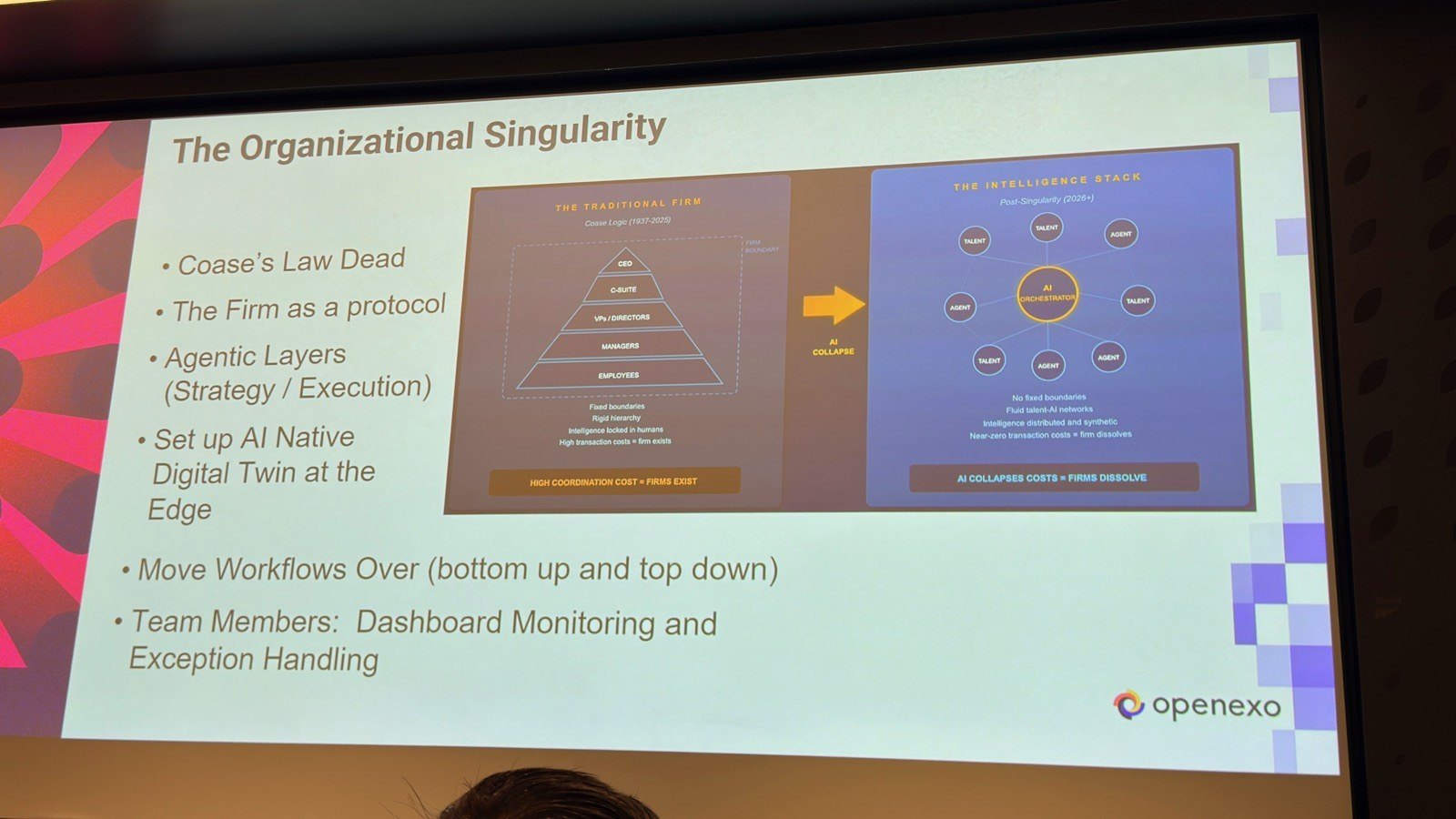
One of Salim's slides contrasted the traditional firm with an intelligence stack. The old model was a hierarchy. Executives at the top. Managers in the middle. Workers at the base. Information moved up. Decisions moved down.
The new model is messier and faster: talent, agents, orchestration, workflows, monitoring, exception handling.
That slide felt uncomfortably relevant.
Education systems are still built like traditional firms. Central office designs. Schools implement. Teachers adapt. Students receive.
But if learning is becoming more personalized, more project-driven, more tool-rich, and more connected to real problems, then the organization around learning has to become more adaptive too.
That means fewer one-size-fits-all rollouts.
More small experiments.
More visible learning loops.
More trust at the edges.
More permission for schools to adapt without waiting for a 90-page implementation guide that arrives after the moment has passed.
This is where technology leadership in a district gets interesting. The job is not to chase every shiny thing. It is to build the conditions where good ideas can move safely, quickly, and with enough governance that we do not drive the bus into a lake.
Speed without judgment is chaos.
Judgment without speed is irrelevance.
Schools need both.
Kansas has a real opportunity
The summit was not just about abstract futurism. It was grounded in Kansas.
Flagship Kansas brought together industry leaders, entrepreneurs, educators, workforce leaders, and policymakers around a simple truth: Kansas cannot afford to treat technology as someone else's economy.
The workforce numbers made that clear. Thousands of tech jobs. Growth in remote roles. A distributed employer base across the state. A talent pipeline that has to start earlier than senior year.
For K-12, that should be a wake-up call.
We do not need every student to become a software engineer. We do need every student to understand that technology is now part of almost every serious field. Agriculture, aviation, health care, logistics, construction, finance, education, manufacturing, public service. Pick your lane. The tools are changing.
That means career exposure has to start earlier. Middle school matters. Hands-on learning matters. Apprenticeships matter. AI literacy matters. So does the ability to work with people, communicate clearly, solve messy problems, and keep going when the first attempt fails.
The future of work is not just technical. It is deeply human.
The question I left with
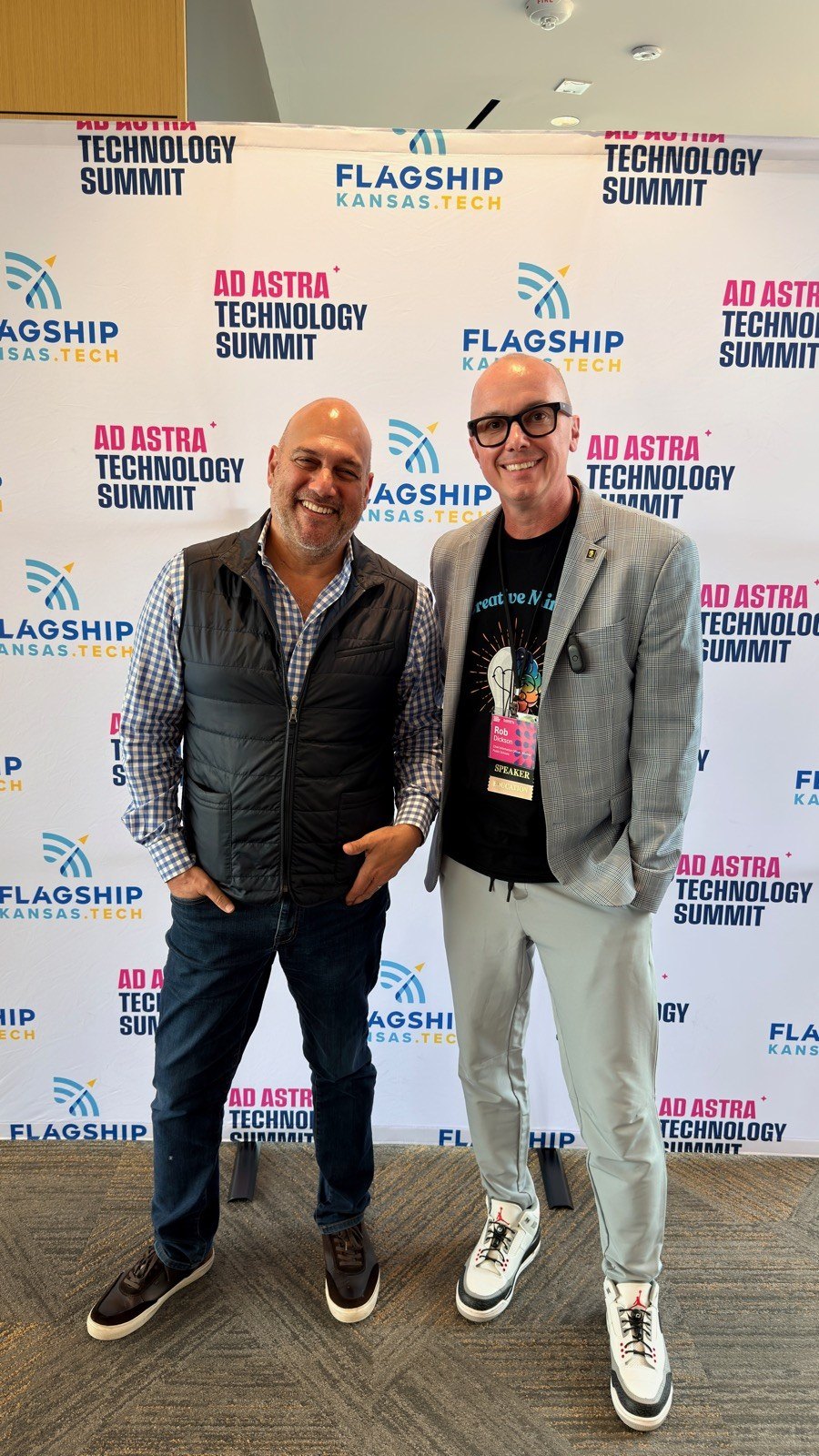
I left the summit thinking less about AI as a technology and more about pace.
Can schools sense change fast enough?
Can we adapt without losing our values?
Can we help students build purpose before the world hands them a tool powerful enough to fake competence?
Can we design learning environments where curiosity, agency, and judgment are not side dishes, but the meal?
The answer has to be yes.
Not because education is naturally good at rapid change. It is not. We all know that. Education can turn a simple decision into a 14-step ritual with a subcommittee and a laminated norm.
But schools are also full of people who care deeply, solve problems daily, and understand children in ways no algorithm ever will.
That is the advantage.
The future of learning will not be built by replacing teachers with tools. It will be built by giving teachers, students, and communities better tools, clearer purpose, and more flexible systems.
The disruption is already here.
The question is whether we keep trying to protect an old model from the future, or whether we build something worthy of the students who are already living in it.